TOXINS, FILLERS, AND THE FIGHT FOR YOUTH:
The Clean Science That’s Changing Beauty Forever
For years, women have been told that beauty means sacrifice: pain, time, and chemical compromise. That a syringe, peel, or high-powered serum is simply the price of looking young. But the glow we chase often conceals a far darker truth—a growing internal burden of toxins, the migration of foreign substances, and mounting costs that go far beyond dollars.
More women today are breaking that cycle. We are choosing activation over suppression and redefining beauty as health, harmony, and confidence from within.
The Chemical Trap of Conventional Beauty
Every morning, the average woman applies more than 168 different chemicals to her body, from lotions and serums to hair products and fragrances.1 Many of these belong to a class called endocrine-disrupting chemicals (EDCs), which interfere with the body’s natural hormonal balance. Among the worst offenders are phthalates, commonly found in perfumes and plastics used throughout the beauty industry.2
These chemicals do not just sit on the skin; they seep in, circulate, and can mimic or block hormones that regulate mood, metabolism, and even aging.3
Clinical research has linked long-term exposure to:
- Hormonal and reproductive harm: Phthalates can lower testosterone, disrupt estrogen, and reduce fertility.4
- Developmental damage: Prenatal exposure is associated with altered genital development and later-life sperm deficits.5
- Metabolic and thyroid disruption: Evidence shows interference with insulin and thyroid hormone signaling.6
- Increased disease risk: Elevated phthalate levels are tied to a 48% higher all-cause mortality and greater cardiovascular risk.7
- Chronic inflammation and oxidative stress: Continuous exposure accelerates cellular damage and aging.8
Studies estimate that the daily use of common beauty products may result in absorption of up to 78 micrograms per kilogram of body weight of certain phthalates,9 which adds up over years. As Harvard Health cautioned, most people are applying dozens of untested chemicals every day in pursuit of beauty.10
The Hidden Toll: Time, Money & Maintenance
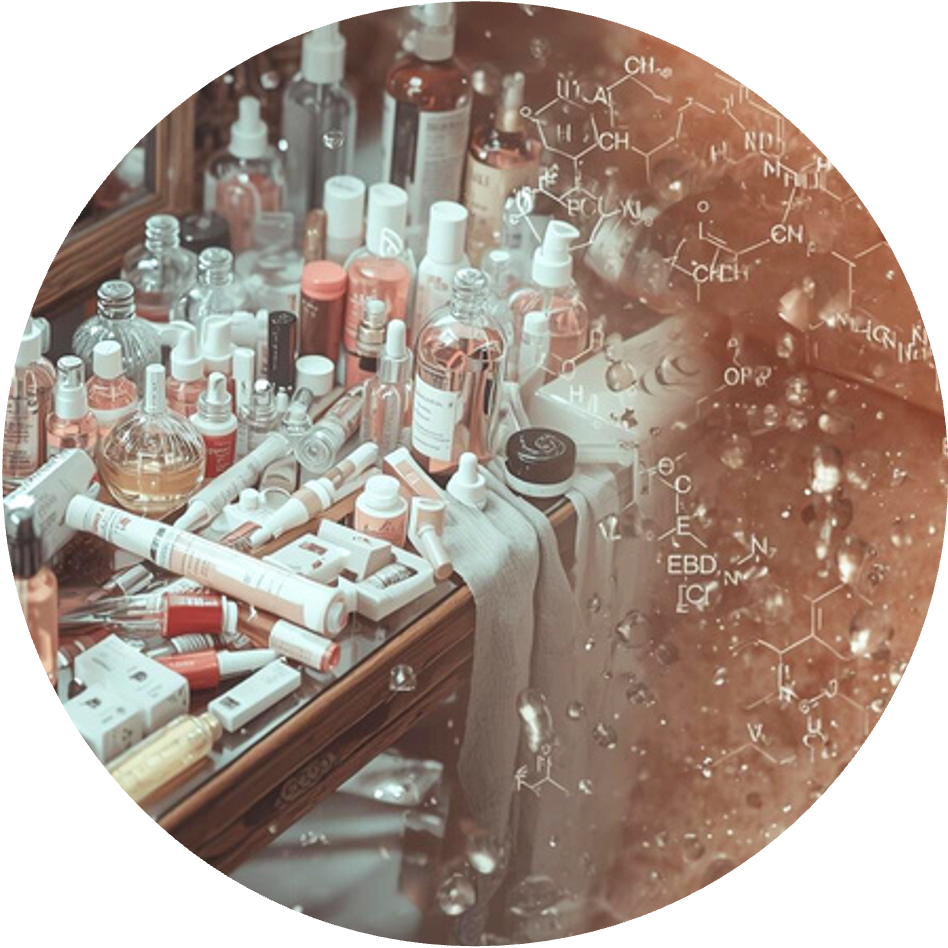
The hidden cost of cosmetic maintenance runs far deeper than the price tag. Hyaluronic acid fillers average $682 per syringe (ASPS), and most people require more than one per session. Botox runs $300–$600 every three to four months, totaling more than $50,000 over a lifetime in high-cost areas like New York City.
Beyond the expense lies the drain on time and energy: hours spent driving to med-spas, waiting, and recovering from procedures that must be repeated again and again.
When “Clean Beauty” Isn’t Actually Clean
The clean beauty movement raised awareness, but even many “clean” products still focus only on the surface. They may avoid parabens or phthalates, yet still rely on synthetic actives and disruptors that only go skin-deep.
True renewal does not come from coating the surface. It comes from activating your body’s own intelligence to repair and regenerate.
The most powerful formula is not strength on your skin. It is activation within your cells. Beyond short-term risks, fillers and injectables can sometimes alter appearance over time, reminding us that even the most advanced cosmetic methods cannot match the body’s natural intelligence for renewal.
The Science of Inside-Out Activation

Beneath the surface lies the most powerful beauty system known to science—your own stem cells. These are your body’s built-in repair agents that restore skin, muscle, and tissue every day. But by midlife, their activity can decline by 50% or more.11
Recent research shows that reactivating dormant stem cells can restore youthful tissue, stimulate collagen production, and extend healthspan in animal models.12 In human studies, stem cell–based strategies have improved skin elasticity, hydration, and integrity.13
The Eternafy Difference: Clean Activation, Not Cosmetic Conflict
Unlike invasive or synthetic beauty methods, Eternafy™ is not about covering up. It is about reawakening.
- No fillers. No toxins. No hidden synthetics.
- 19 adaptogenic and antioxidant ingredients that support seven key renewal pathways, from stem cell function and NAD⁺ support to mitochondrial energy and inflammation balance.
- Designed for synergy, not stimulation, supporting your body’s natural rhythm of repair.
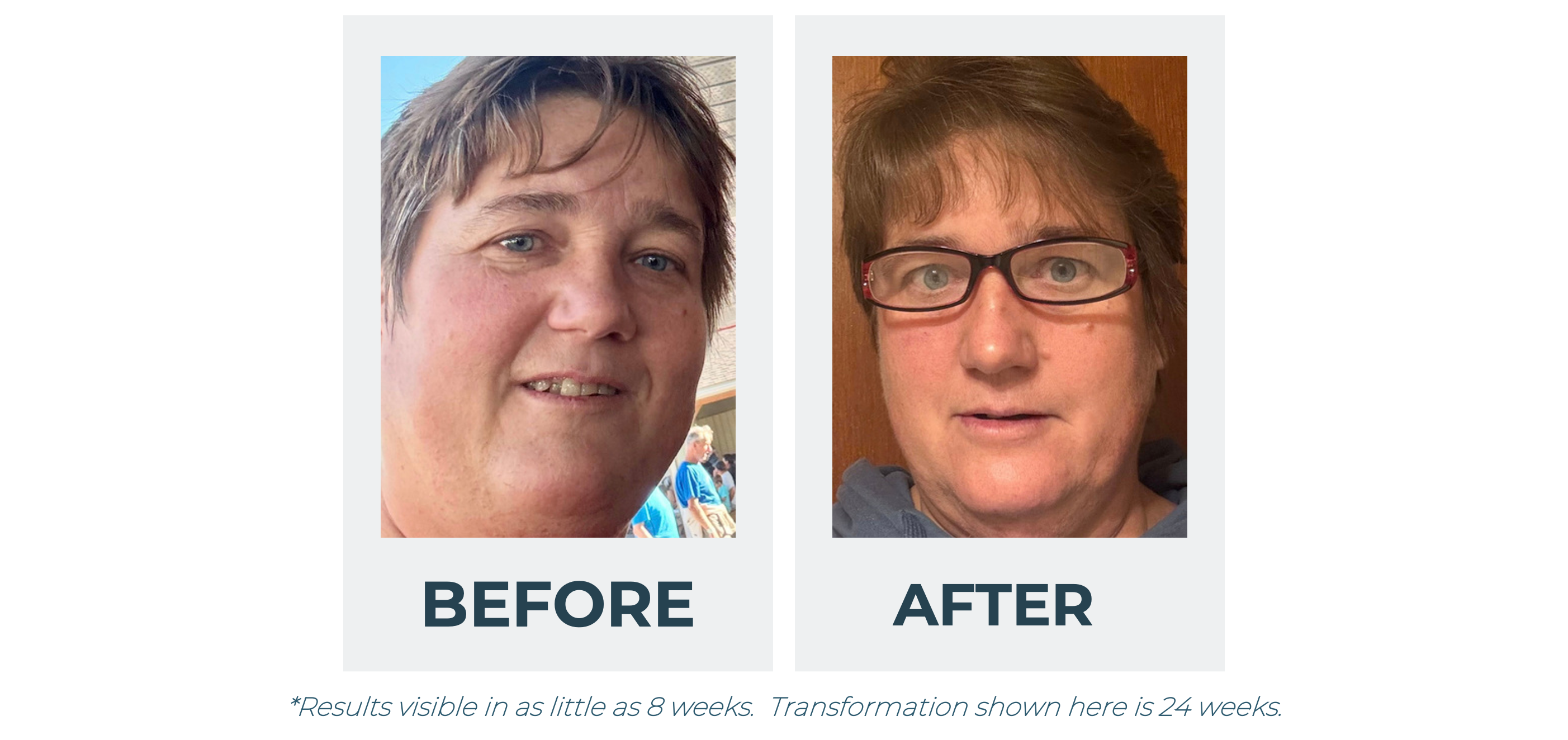
- Users report smoother, firmer skin, enhanced energy, faster recovery, and a radiant vitality that shows from the inside out.
Before & After: What Stem Cell Renewal Looks Like


The Clean Revolution in Beauty
The beauty industry built its empire on fear, masking, and maintenance. But science is rewriting that story, showing that true, sustainable beauty begins within, not with toxins or temporary fixes.
Pause the injections. Stop the chase. Choose restoration over resistance.
Maybe youthfulness was never meant to be injected, smeared, or sculpted. Maybe it was always something your body was waiting to remember.
Experience #TheEternafyEffect — the clean revolution in beauty starts within.
References
- Dodson, R. E., et al. “Endocrine Disrupting Chemicals in Personal Care Products.” Environmental Health Perspectives, 2024; 132(3): 037001.
- Quart, A., et al. “Phthalates and Their Impact on Human Health.” Food and Chemical Toxicology, 2023; 180: 113996.
- Hauser, R., & Calafat, A. M. “Phthalates and Human Health.” Reproductive Toxicology, 2005; 19(2): 167–186.
- Boas, M., et al. “Endocrine Disruption and Reproductive Effects of Phthalates.” Toxicology Letters, 2012; 211(3): 235–243.
- Frederiksen, H., et al. “Human Health Risks from Prenatal Phthalate Exposure.” International Journal of Hygiene and Environmental Health, 2021; 235: 113759.
- Zhang, Y., et al. “Phthalate Exposure and Metabolic Disruption.” Chemosphere, 2022; 288: 132537.
- Trasande, L., et al. “Association of Phthalate Exposure with Mortality and Cardiovascular Disease.” Environmental Pollution, 2021; 281: 117070.
- Gauch, A., et al. “Chronic Low-Dose Exposure and Oxidative Stress.” Food and Chemical Toxicology, 2023; 180: 113996.
- Frederiksen, H., et al. “Daily Absorption Levels of Phthalates from Common Beauty Products.” International Journal of Hygiene and Environmental Health, 2021; 235: 113759.
- Harvard Health Publishing. “Toxic Beauty: What’s Really in Your Products?” Harvard Health, 2024.
- Wollina, U., & Goldmann, A. “Filler Migration After Facial Injection.” Narrative Review: Cosmetics, 2023; 10: 115.
- Boada, A., et al. “Stem Cell Decline with Aging and the Potential for Regenerative Activation.” Frontiers in Cell and Developmental Biology, 2023; 11: 114632.
- Wu, Y., et al. “Human Mesenchymal Stem Cell Therapy and Skin Regeneration.” Stem Cell Research & Therapy, 2022; 13(1): 87.
- American Society of Plastic Surgeons (ASPS). “What’s Behind the Cost of Botox and Injectable Fillers?” PlasticSurgery.org.
- CareCredit & Byrdie Editorial Team. “Average Botox Prices and Treatment Costs.” CareCredit / Byrdie, 2023.



Post a Comment