

STEM CELLS AND THE SECRET TO RENEWAL:
Why Age 25 Changes Everything
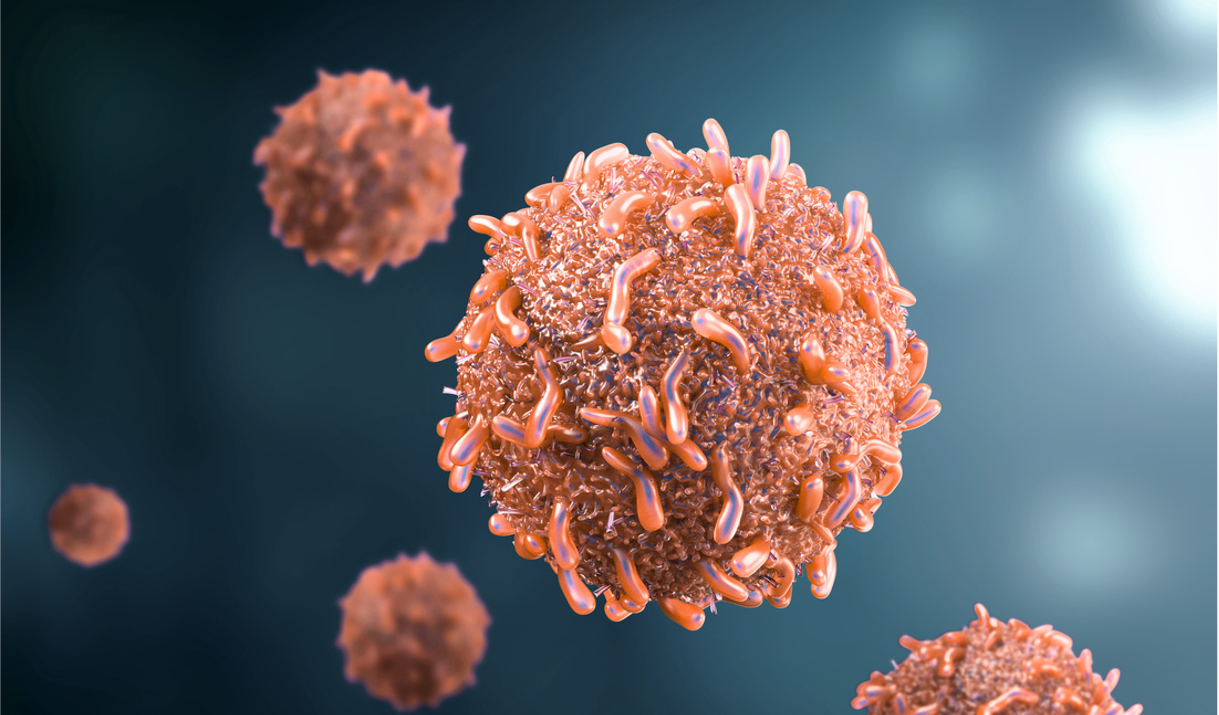
Imagine if your body carried a secret code for youth — a code that fuels energy, repairs damage, and keeps your skin glowing. The truth is, it does. That code is stem cells. These remarkable “master cells” are the foundation of healing and renewal, capable of transforming into nearly any type of cell — muscle, nerve, blood, or skin1. They’re why you bounce back quickly in your teens and early 20s and why recovery feels effortless when you’re young.
But here’s the catch: research shows that stem-cell performance begins to decline as early as age 25. By midlife, the body’s natural repair system has already slowed, and by your 50s and 60s, circulating stem cells can be cut by more than half2. This quiet decline is one of the reasons why energy drops, skin looks older, and resilience fades with age.
How Stem Cells Power Renewal
Stem cells act like the body’s personal repair crew. When you experience stress, injury, or even the normal wear-and-tear of daily life, your body sends out a signal: “We need help.” Stem cells respond by rushing to the area, transforming into the needed cell type, and fueling repair and restoration34.

Where They Come From
Most of your body’s stem cells are produced in your bone marrow — the soft, spongy tissue at the center of your bones. When we’re young, this marrow is vibrant pink and rich with active stem cells.
As we age, that youthful pink marrow gradually turns yellow as fat cells replace active tissue. This shift means fewer stem cells are generated and released — which is why recovery slows, skin renewal decreases, and overall vitality can wane56. Think of it like the body’s stem-cell “factory” running at half speed.
The Decline That Starts at 25
Most people think aging starts later in life, but biology tells a different story.
- Around age 25: Hematopoietic stem cells begin showing reduced regenerative potential6.
- By the 30s and 40s: Mesenchymal stem cells become less responsive to repair signals7.
- By the 50s and 60s: Circulating stem cells are reduced by more than half2.
The decline is gradual but unmistakable — and it starts at the very core of our biology: the bone marrow4 5.
Nutrients That Support Cellular Renewal
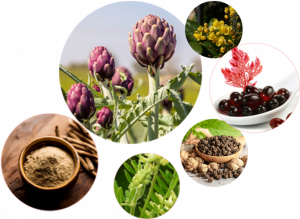
Here’s where advanced nutraceuticals come in. Modern science is uncovering natural compounds that influence the very pathways tied to energy, repair, and resilience.
Adaptogens for Stress & Resilience
- Rhodiola Rosea — Enhances stress resistance and fights fatigue9.
- Ashwagandha Root — Helps balance stress and energy levels10.
- Asian Ginseng — Linked to vitality and improved cellular signaling11.
- Astragalus Root — Supports telomere length and healthy aging8.
- Gynostemma (Jiaogulan) — The “immortality herb,” activates AMPK for metabolic balance13.
Antioxidants for Cellular Defense
- Astaxanthin — Potent carotenoid; protects skin and mitochondria14.
- Green Tea Extract (EGCG) — Boosts cellular defense mechanisms15.
- Quercetin — Antioxidant flavonoid with healthy-aging benefits16.
- Milk Thistle (Silymarin) — Protects liver and cells from oxidative stress17.
- Rosemary Extract — Carnosic acid linked to neuroprotection18.
- Spirulina — Nutrient-dense; supports immune and cellular health19.
- Ginger Root — Supports circulation, digestion, and antioxidant defenses20.
- Apigenin — Plant flavonoid tied to stress resistance and longevity pathways21.
Energy Pathway Activators
- Berberine — Influences AMPK, the “metabolic master switch”22.
- PQQ (Pyrroloquinoline Quinone) — Supports mitochondrial biogenesis and energy production23.
- Coenzyme Q10 — Essential for mitochondrial energy and cellular protection24.
- Turmeric (Curcumin) — Influences repair and anti-inflammatory pathways12.
- Pterostilbene — Resveratrol relative; studied for cellular protection and longevity25.
- Black Pepper Extract (Piperine) — Enhances bioavailability of other nutrients26.
Together, these 19 ingredients don’t just add up — they synergize to create a whole-body renewal system that supports energy, repair, and resilience at the cellular level.
Renewal Is in Your DNA
Stem cells remind us of something profound: our bodies are built for renewal. Yet with their decline beginning as early as age 25, supporting cellular health early on isn’t a luxury — it’s a necessity for those who want to defy age and live life to the fullest.
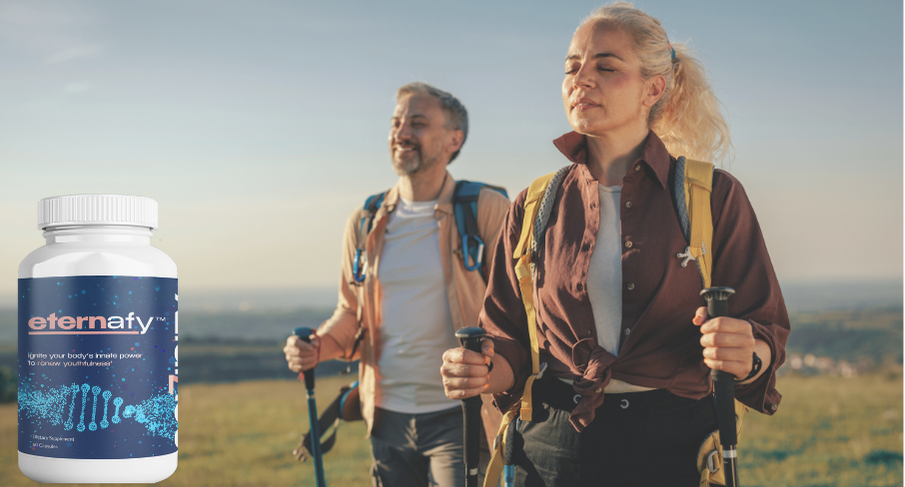
With advanced formulations like eternafy™, we’re not just supplementing nutrients. We’re nourishing the body’s natural intelligence, activating its renewal codes, and helping the bone marrow — the heart of your stem cell factory — perform more youthfully again. When your cells thrive, you thrive. It’s time to activate what’s already within you.
YOU CAN’T STOP TIME — BUT YOU CAN REIGNITE YOUR BIOLOGY.
This Is the Age of Activation.
References
- Weissman, I.L. (2000). Stem cells: units of development, units of regeneration, and units in evolution. Cell, 100(1), 157–168.
- Rando, T.A. (2006). Stem cells, aging and the quest for immortality. Nature, 441(7097), 1080–1086.
- Strauer, B.E., & Kornowski, R. (2003). Stem cell therapy in perspective. Circulation, 107(7), 929–934.
- Morrison, S.J., & Scadden, D.T. (2014). The bone marrow niche for hematopoietic stem cells. Nature, 505(7483), 327–334.
- Ho, Y.H., & Méndez-Ferrer, S. (2020). Microenvironment contributions to hematopoietic stem cell aging. Haematologica, 105(1), 38–46.
- Geiger, H., et al. (2013). Hematopoietic stem cell aging. Nature Reviews Immunology, 13, 376–389.
- Stolzing, A., et al. (2008). Age-related changes in human bone-marrow-derived mesenchymal stem cells. Rejuvenation Research, 11(1), 63–76.
- Zhang, W., et al. (2014). Astragalus and age-related diseases. American Journal of Chinese Medicine, 42(1), 1–22.
- Panossian, A., & Wikman, G. (2010). Effects of adaptogens on stress. Phytomedicine, 17(7), 481–493.
- Chandrasekhar, K., Kapoor, J., & Anishetty, S. (2012). Ashwagandha root extract in reducing stress and anxiety. Indian Journal of Psychological Medicine, 34(3), 255–262.
- Kennedy, D.O., et al. (2001). Panax ginseng and cognitive performance. Psychopharmacology, 157, 106–114.
- Aggarwal, B.B., et al. (2007). Curcumin in the Indian solid gold. Advances in Experimental Medicine and Biology, 595, 1–75.
- Megalli, S., Davies, N.M., & Roufogalis, B.D. (2005). Hypoglycaemic and hypolipidemic effects of Gynostemma pentaphyllum. Phytotherapy Research, 19(8), 657–661.
- Ambati, R.R., et al. (2014). Astaxanthin: sources, extraction, stability, biological activities and commercial applications. Marine Drugs, 12(1), 128–152.
- Yang, C.S., et al. (2009). Cancer prevention by tea: animal studies, molecular mechanisms and human relevance. Cancer Prevention Research, 2(6), 553–563.
- Boots, A.W., Haenen, G.R.M.M., & Bast, A. (2008). Health effects of quercetin. European Journal of Pharmacology, 585(2–3), 325–337.
- Federico, A., et al. (2011). Milk thistle, silymarin and chronic liver disease. World Journal of Hepatology, 3(7), 171.
- Satho, T., et al. (2008). Carnosic acid protects neurons. Journal of Neurochemistry, 104(4), 1116–1131.
- Belay, A. (2002). The potential application of Spirulina. Journal of Nutritional and Therapeutic.
- Mishra, N.S., et al. (2013). Anti-oxidative and anti-inflammatory effects of ginger. International Journal of Preventive Medicine, 4(Suppl 5), S536–S542.
- Shukla, S., & Gupta, S. (2010). Apigenin: a promising molecule for cancer prevention. Biomedical Pharmacotherapy, 64(5), 398–404.
- Yin, J., et al. (2008). Efficacy of berberine in patients with type 2 diabetes mellitus. Metabolism, 57(5), 712–717.
- Chowanadisai, W., et al. (2010). Pyrroloquinoline quinone. Journal of Biological Chemistry, 285(2), 142–152.
- Littarru, G.P., & Tiano, L. (2007). Bioenergetic and antioxidant properties of coenzyme Q10. Journal of Nutrition, 137(3), 655–660.
- McCormack, D., & McFadden, D. (2012). Pterostilbene. Journal of Agricultural and Food Chemistry, 60(23), 5732–5736.
- Srinivasan, K. (2005). Black pepper and its pungent principle piperine. Critical Reviews in Food Science and Nutrition, 47(8), 735–748.



Post a Comment